Skip to content

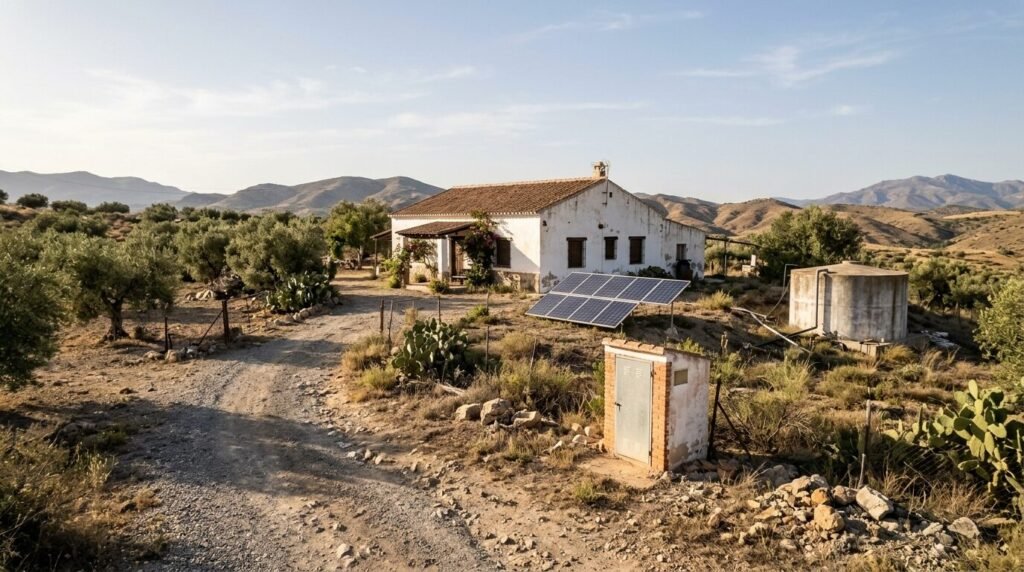












Buying a finca in Spain can feel very different from buying an apartment in town. Rural homes often depend on private water supplies, older electrical systems, septic tanks and access roads that are not always straightforward. Before you fall in love with the setting, check the practical side first.
This buying a finca in Spain checklist focuses on the things that most often cause problems later: water, power, internet, road access and the legal status of buildings. If you are also comparing the wider buying process, our guide to buying property in Spain step by step is a useful companion.
1. Check where the water comes from
The first question is simple: is the water from the mains, a private well, a community supply or a tank delivery system? Mains water is usually easiest, but in rural areas a finca may depend on a well or a shared supply with extra rules. Ask who bills the water, who maintains the system and whether there are any restrictions in dry months.
















If the property has a well, ask for paperwork showing that it is registered and lawful. In Spain, water rights and well use can be a sensitive issue, so it is wise to ask the seller, the estate agent and a local lawyer to check the situation with the relevant authority. If a deposit or connection fee is needed for a mains supply, the amount can vary a lot, so ask for written figures before you commit.
2. Confirm there is enough water all year round
A finca can look perfect in spring and become a different story in late summer. Ask when the water supply is strongest, whether pressure drops in peak season and if the property has storage tanks. If the home has gardens, a pool or guest accommodation, make sure the current supply can handle the demand.
A practical test is to visit at different times of day and, if possible, during a dry period. You can also ask neighbours how reliable the supply is. If the seller says everything is fine, do not rely only on verbal assurances: ask for recent utility bills, service contracts or other evidence where available.
3. Inspect the electricity connection and the meter
Some fincas have a normal grid connection, while others run on older, underpowered lines or generators. Check whether the electricity contract is in place, who pays for it and whether the meter is in the seller’s name. If the property has an old installation, ask an electrician to confirm that the system is safe and suitable for your needs.



A full upgrade can involve paperwork, inspections and a wait of anything from a few days to several weeks, depending on the situation and the local utility. If the house is partly off-grid, check whether there is backup power for pumps, lights and internet equipment. For broader buying costs, our guide on the real cost of buying property in Spain can help you budget realistically.
4. Decide if solar makes sense for the property
Many rural homes use solar panels, batteries or hybrid systems. That can work well, but only if the system matches your actual consumption. Ask how many panels are installed, how old the batteries are and whether the system can run essential appliances in winter as well as in summer.
Do not assume that solar automatically means cheap or hassle-free power. Batteries wear out, inverters need maintenance and some systems are sized only for basic use. If you plan to work from home, use air conditioning or run pumps and a large fridge, ask a solar installer to review the set-up before you buy.
5. Test internet options before you sign
Internet can be the biggest surprise in rural Spain. Coverage may come through fibre, fixed wireless, 4G, 5G or satellite, but availability depends on the exact location. Do not rely on postcode searches alone; ask the seller for the provider and test the signal at the property itself.
If you need reliable video calls or remote work, ask what speeds are actually achieved inside the house, not just near the road. Installation time can range from a few days to several weeks, and if a new line is needed the process may take longer. If connectivity is essential for you, build that into your decision from the start.
6. Check road access and year-round entry
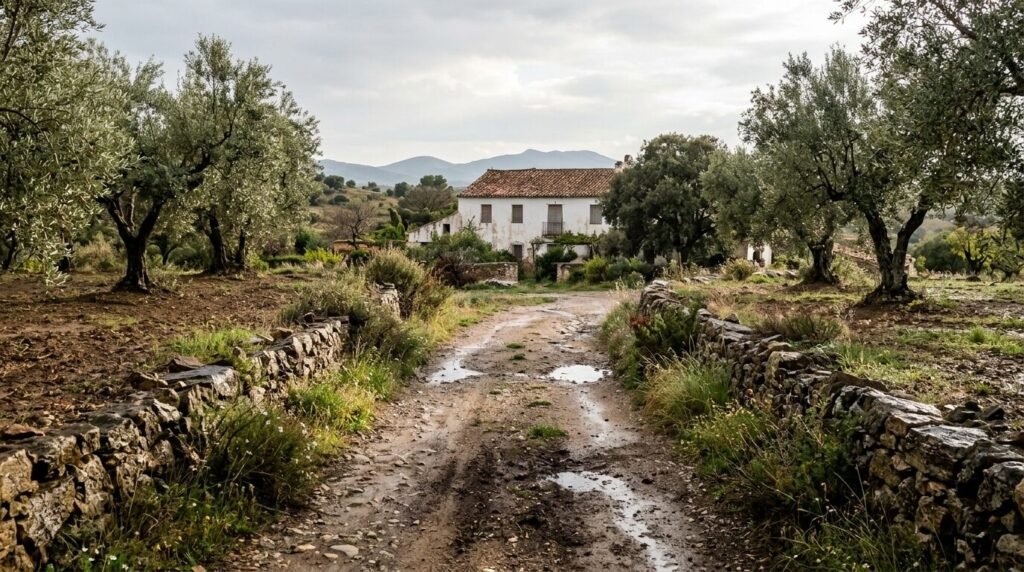
A finca may be attractive on paper but awkward to reach in practice. Check whether the access road is public or private, who maintains it and whether it is passable in rain. Narrow tracks, steep bends and rough surfaces can affect deliveries, emergency access and resale value.
Ask whether the road is registered, whether neighbours share maintenance costs and whether there are any known disputes. If the final stretch is a dirt road, visit after heavy rain if possible. It is also worth checking access for builders, septic tank emptying vehicles and the internet installer, because all of them may need to reach the house easily.
7. Verify the legal status of the house and outbuildings
Rural properties can have extensions, terraces, storage rooms or guest annexes that are not fully registered. Ask for the escritura, which is the deed, and compare it with the Catastro, the official property register for maps and reference details. If buildings do not match the paperwork, find out whether they are legal, pending regularisation or simply not recorded.
This is one of the most important checks in a buying a finca in Spain checklist. A building that looks finished can still have planning issues if it was altered without permission. Because local rules can change, it is sensible to ask a lawyer or architect to review the legal status before you sign anything binding.
8. Ask how wastewater and the septic tank are handled
Many fincas use a septic tank or another private wastewater system. Ask where the tank is, how often it is emptied, who does the maintenance and whether there are any certificates or service records. In some areas, older systems may not meet current requirements, so a visual check is not enough.
If the property is not connected to mains drainage, ask a professional whether the system is suitable for the number of bedrooms and the expected use. Emptying and maintenance costs vary depending on access, tank size and local service rates, so ask for recent invoices if available. This is especially important if you plan to rent the property out later.
9. Budget for connection, maintenance and upgrades
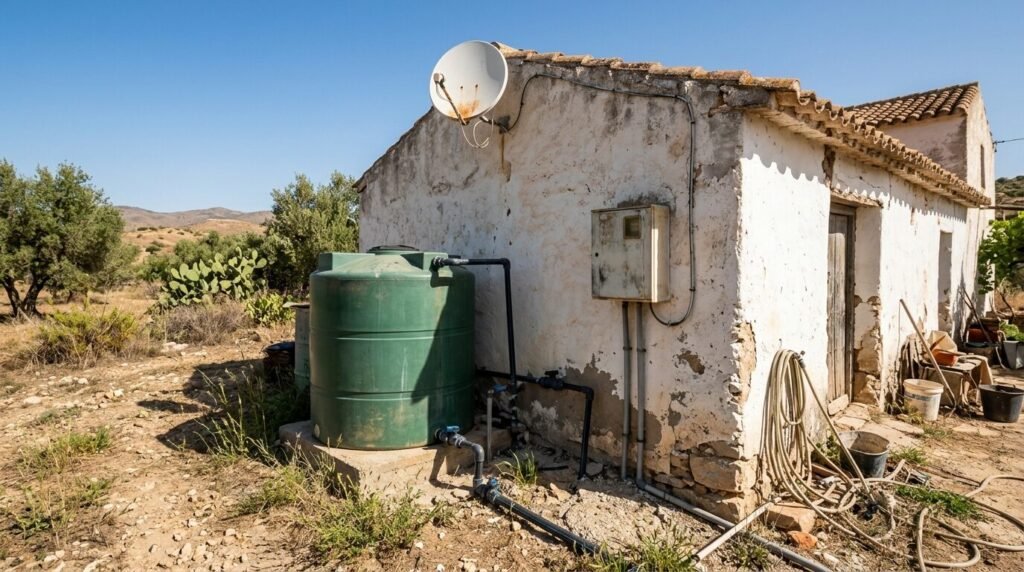
Rural properties often need small but important upgrades after purchase. That may include a new water pump, a solar battery replacement, a stronger internet solution, electrical certification or road repairs. The cost can range from modest to significant, so get quotes before you make an offer if possible.
It is better to budget for surprises than to hope they will not happen. If you are taking a mortgage, ask the bank how it views the property’s utility situation, because non-standard services can affect lending decisions. For more on borrowing, see Spanish mortgages for non-residents.
10. Use a professional review before you commit
A finca purchase often needs more than a quick visit and a basic viewing. A local lawyer, surveyor or architect can help you check the legal paperwork, utility set-up and physical condition of the buildings. That extra review can save you from problems that are expensive to fix later.
If you are unsure, ask for a written checklist of what has been checked and what still needs confirming. We and our trusted partners can help you organise the practical side and put you in touch with the right local professionals. Do not sign a reservation agreement or pay a deposit until you understand exactly what is included.
Red flags to slow down on
- No clear paperwork for the water supply or well
- Electricity that looks improvised or underpowered
- Internet that only works well in one outdoor spot
- Access roads that flood or become unusable in winter
- Buildings that do not match the escritura or Catastro
- A septic tank with no maintenance records
A rural purchase can work very well if the basics are checked properly. The best approach is to treat water, power, internet and legal status as part of the property itself, not as afterthoughts. If any of those points are unclear, slow down and get proper advice before you proceed.
Read more on NewInSpain
Help from our Málaga team
If you are seriously considering a finca, we and our trusted partners can help you review the practical checks, speak to local professionals and keep the process moving in a sensible order. We can also help you compare properties before you commit, so you know what is realistic and what needs more investigation.
Get in touch with us with no obligation if you want support with a rural purchase in Spain. A little guidance at the start can save time, stress and unnecessary costs later.
Looking for a home in Spain?
We and our trusted partners help you buy, sell or rent property in Spain – from the first viewing to the keys.
FAQ
Is a finca harder to buy than a normal flat in Spain?
Often, yes, because rural homes can have private water, older utilities and extra legal checks. The purchase can still be straightforward if you verify the paperwork and the services before signing.
Should I ask for a water and electricity bill before buying?
Yes, if available. Bills can help confirm the provider, the contract status and whether the supply is active, but they should be checked alongside the legal paperwork and a physical inspection.
Can I rely on internet coverage maps for a rural property?
Not entirely. Maps are a starting point, but you should test the signal at the property and ask what connection speed is actually available inside the house.
Do I need a lawyer for a finca purchase?
It is strongly recommended, especially if the property has wells, solar systems, septic tanks or unregistered buildings. Rules can vary by region, so check everything with a professional and the relevant official sources.
This article is general information, not legal or tax advice. Rules in Spain change, so always check your own situation with a qualified professional.